
↗ 04 — THE VENUE
The visitor never sees a page change. They move through a venue — arrival, lobby, halls, pavilion, stage, and a follow-up that keeps working after they log out.
Virtual Experience Platform — proposal for FranchiseWorld · EBG Realty, prepared by Vyug Reality Solutions Private Ltd. Enter the four-digit access code.
 VYG—2601
A multi-tenant virtual experience platform for FranchiseWorld and EBG Realty. Two independently branded venues. One core that a third company can join without a line of new code.

Thirty-four sections, and the hard requirement is in three of them: one codebase, two unrelated industries, and a third company that must join later without a rebuild. Everything else follows from getting that right.
FranchiseWorld and EBG Realty must feel like different products and share one codebase. That is an architecture decision, not a design decision.
No table, API or screen may assume franchise or real estate. Terminology, fields, halls, offerings and CTAs are data — not code.
Entry to hall to pavilion to offering to document to meeting, with dwell time at each step. The analytics are the product, not a report.

“I entered an exhibition, moved through halls, visited a brand booth, spoke to a representative, picked up the brochure, attended a presentation and booked a meeting” — not “I browsed a franchise listing website.”
A visitor knows they have entered somewhere before reading a word.
At every moment they know where they are and what is one step away.
A human conversation is one click from the moment of interest.

App-layer tenant checks fail the day someone forgets a WHERE clause.
Row-level security makes cross-tenant reads impossible at the engine, not the endpoint —
which is what acceptance scenario E actually demands.
Domain resolves the tenant before a single byte of content loads
Segment schema — terminology, fields, taxonomy, module toggles
Pavilion · offering · scheduling · leads · analytics
Postgres with row-level security — isolation the database enforces
Onboarded by tenant creation, domain mapping, schema configuration and content loading. No clone. No new codebase.
The visitor never sees a page change. They move through a venue — arrival, lobby, halls, pavilion, stage, and a follow-up that keeps working after they log out.
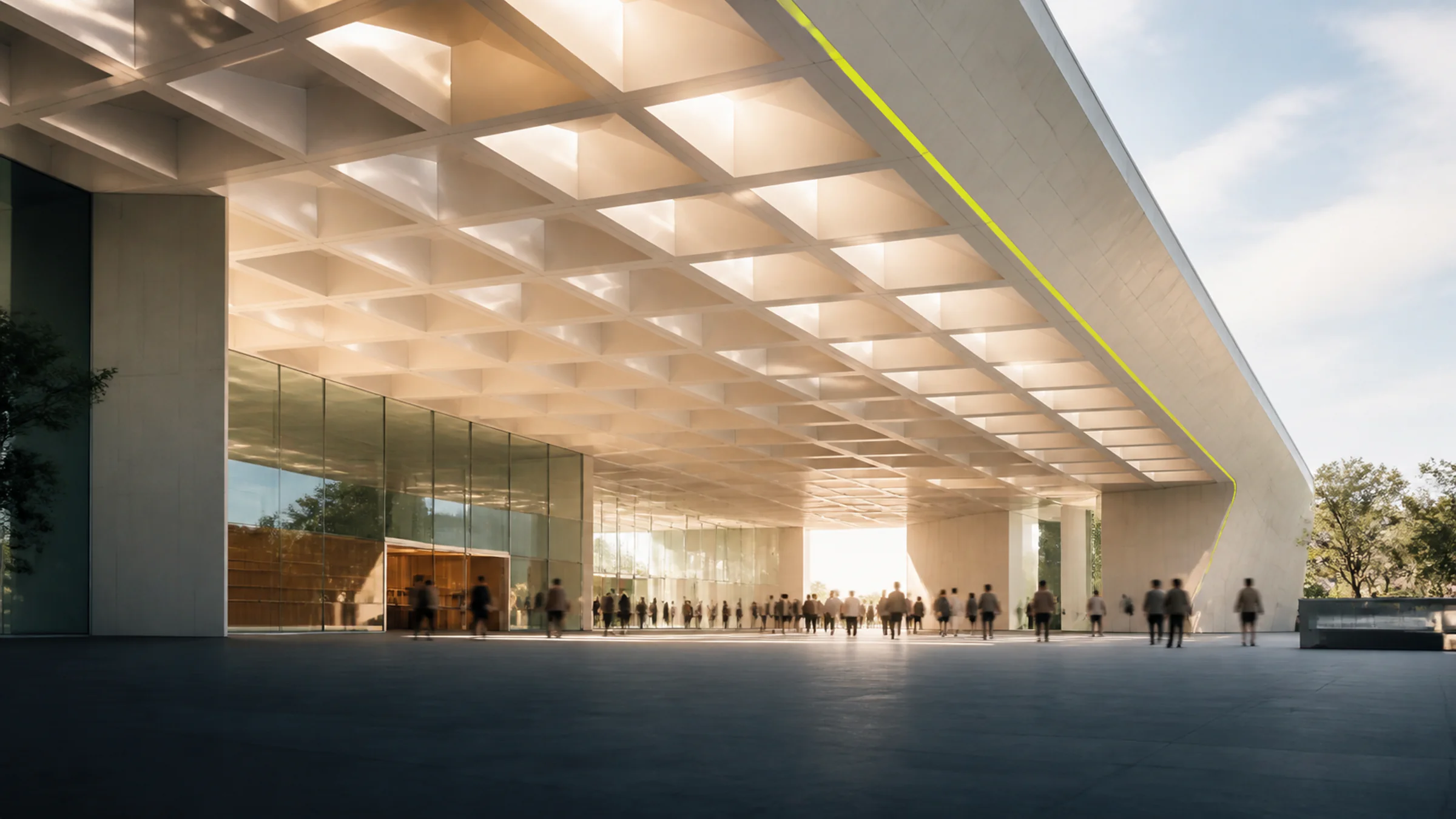
The doors are the product. A visitor should know they have entered somewhere before they read a single word.
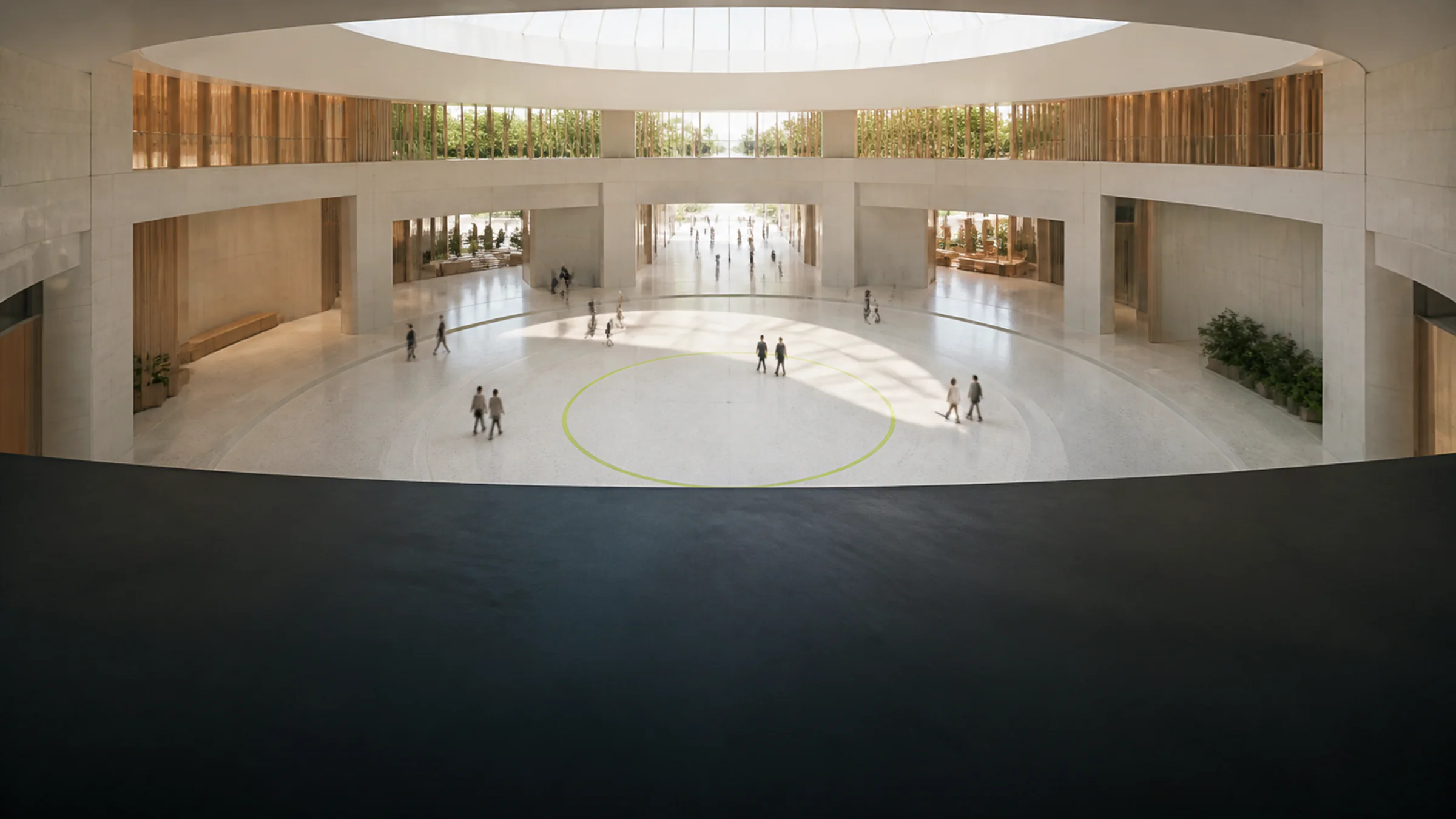
One orientation space. Every destination in the venue is one decision away, and the visitor always knows where they stand.
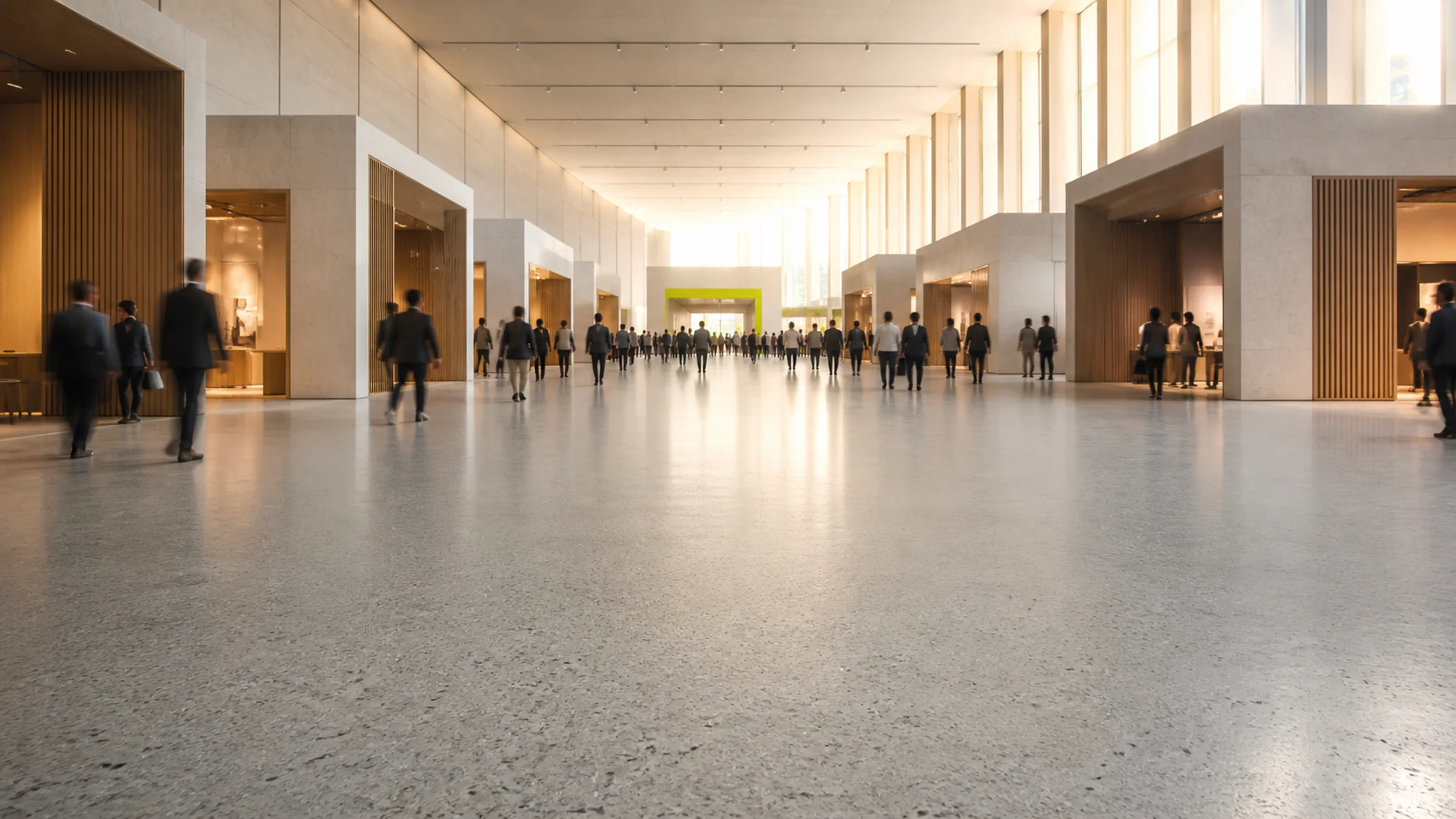
Category zones the tenant defines. F&B and Retail for one company, Villas and Plots for the other — same engine, different world.

The conversion floor. Identity, offering, media, documents, availability and a live human — without ever leaving the room.
Live sessions that end in a booking, not applause. Every talk carries the pavilion it came from.

The expo does not close. Shortlists, downloads, meetings and reminders keep working after the visitor logs out.
One pavilion component. Sixteen optional modules, each controlled from the CMS at tenant or entity level. Turn one off and it disappears — no empty card, no dead button, no orphaned nav. Try it.
Logo · statement · category · verified status
What is this opportunity — start/completion tracked
Leadership message — label configurable per tenant
Images · walkthroughs · case studies
Zero, one or many options — hides entirely at zero
Dynamic attributes bound to the selected offering
Territories or inventory — segment-appropriate model
Common or offering-specific · versioned · tracked
Outlets, project sites or experience centres
Online / busy / offline — gates instant contact
Prefilled with tenant + entity + selected offering
Queue-based 1:1 with transfer and transcript policy
Instant video — falls back to scheduling on timeout
Local-time slots · no double booking · .ics invite
Tenant-defined appointment type
Saved at offering level, persistent across devices
Every module is disabled. In production the pavilion would not publish — the CMS blocks it at the completeness check.
Same component. Same database. Same API. Flip the tenant and every label, field, unit, document and CTA is replaced from the segment schema — with no deployment and no branch in the code. This is acceptance scenario C and D, running.
/ Nothing above is a separate page, template or code path. It is one renderer reading one schema.
Video and webinar infrastructure is a solved, metered commodity. Building it would add months to launch and put concurrency risk on the critical path. We buy it, wire it in, and you pay for it on event days — not every day.

A first-party event trail, not a pixel. Every movement, media play, document open and contact is captured with tenant, entity and selected offering attached — which is the only reason the sales queue can be trusted.
A prioritisation aid, not a judgement about a person. Admin can always open the actions that produced a score.
You asked for no mandatory stack, and for what happens if a vendor is swapped. So every row carries an alternate. Nothing here holds your data hostage, and the four metered services are marked.
Phases 01–03 put both tenants live. Phase 04 is growth capital — a third company, AI, multilingual and the Signature 3D tier — and it is deliberately separable so Phase 1 stays cost-conscious, exactly as §32 asks.
A signed-off experience and an architecture that cannot be argued with later.
Both tenants live end-to-end, operated entirely from the CMS.
The venue runs a real event day at target concurrency.
A third company onboards by configuration. The platform starts selling itself.
One-time build below. Infrastructure and metered third-party services are recurring and scale with your concurrency — the bands are in the appendix, along with support.

Phase 01 starts with a two-day discovery workshop and ends with a prototype your stakeholders can walk through. Everything after that is execution.
Everything §20.1 and §29 ask for, kept out of the main scroll on purpose.
Third-party services are billed at cost, in your own vendor accounts. We do not mark them up and we do not hold the contracts.
Per tenant. Phase 01 cannot close without these.